
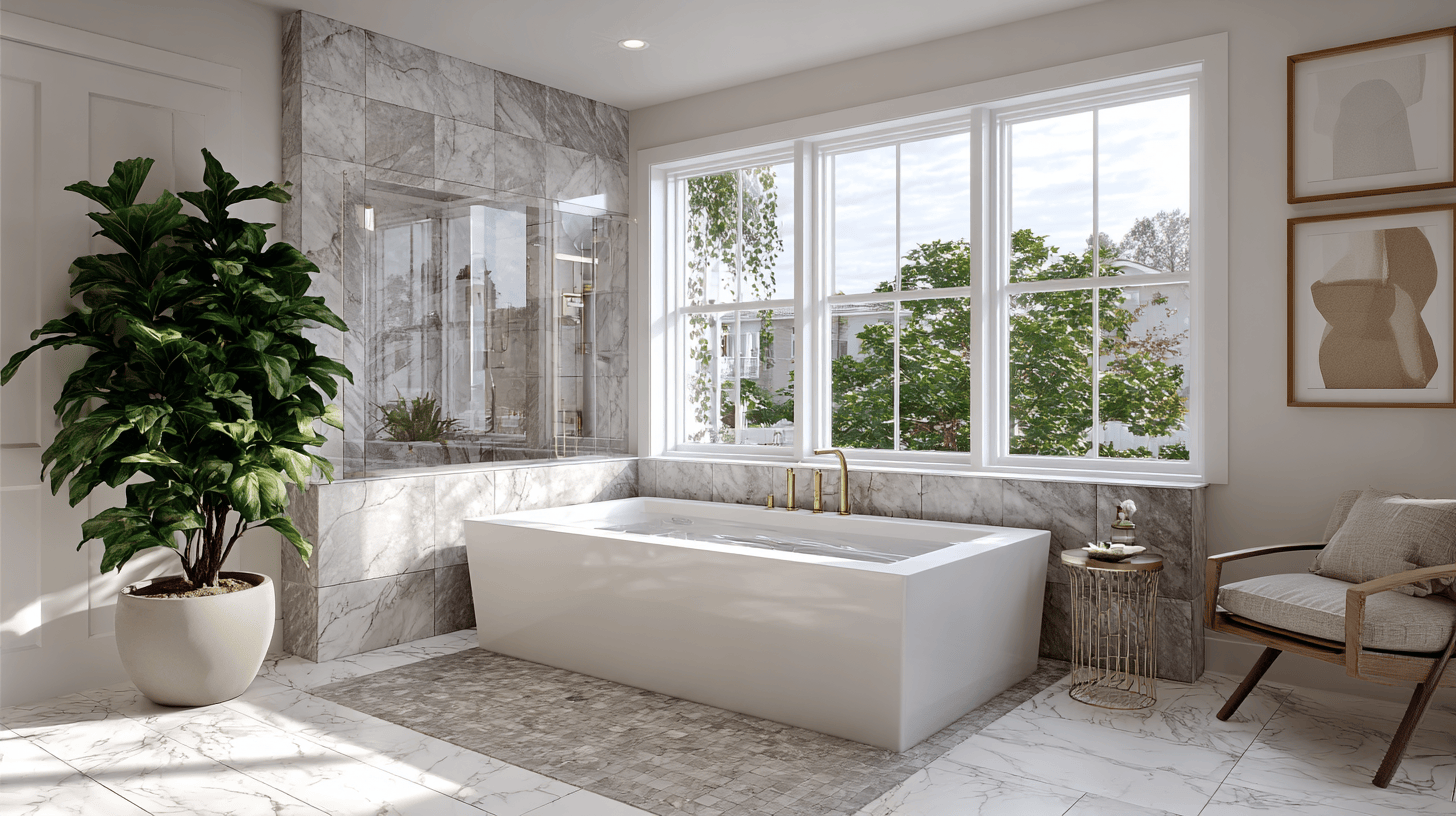
(and How It Can Make or Break Your Daily Ritual)
You’re about to spend thousands on a new bathtub. You’ve fallen in love with the shape, the depth, the Instagram-worthy photos. But here’s the truth most showrooms won’t tell you: The material is more important than the design.
Get it wrong, and in two years you’ll be dealing with scratches, stains, yellowing, or a tub that feels cold the second you step in. Get it right, and your bathtub will look and feel brand new for 15–20 years — while giving you the exact experience you paid for.
Here’s your no-nonsense guide to the most popular bathtub materials in 2025 and the honest pros and cons of each.
Best for: Japanese deep-soaking tubs, freestanding sculptural designs, and 99 % of luxury renovations under $8,000.
Best for: Modern minimalist bathrooms and anyone who hates visible seams.
The catch: Weighs 350–500 lbs — your floor may need reinforcement.
Best for: Traditional clawfoot tubs and people who value heritage over trends.
The reality: Porous (needs sealing every year), heavy, expensive, and stains if you use bath bombs.
Best for: Statement pieces in homes that already have a full-time housekeeper.
Downside: Price tag starts at $10,000+ and it will change color (some love it, some don’t).
Best for: High-end boutique hotels and homeowners who want something no one else has.